

Development notes
Inside Tumble Tavern's six-die loadout.
Six dice come to the table. Nine are waiting in the collection. Three runestones decide how far the turn can bend.
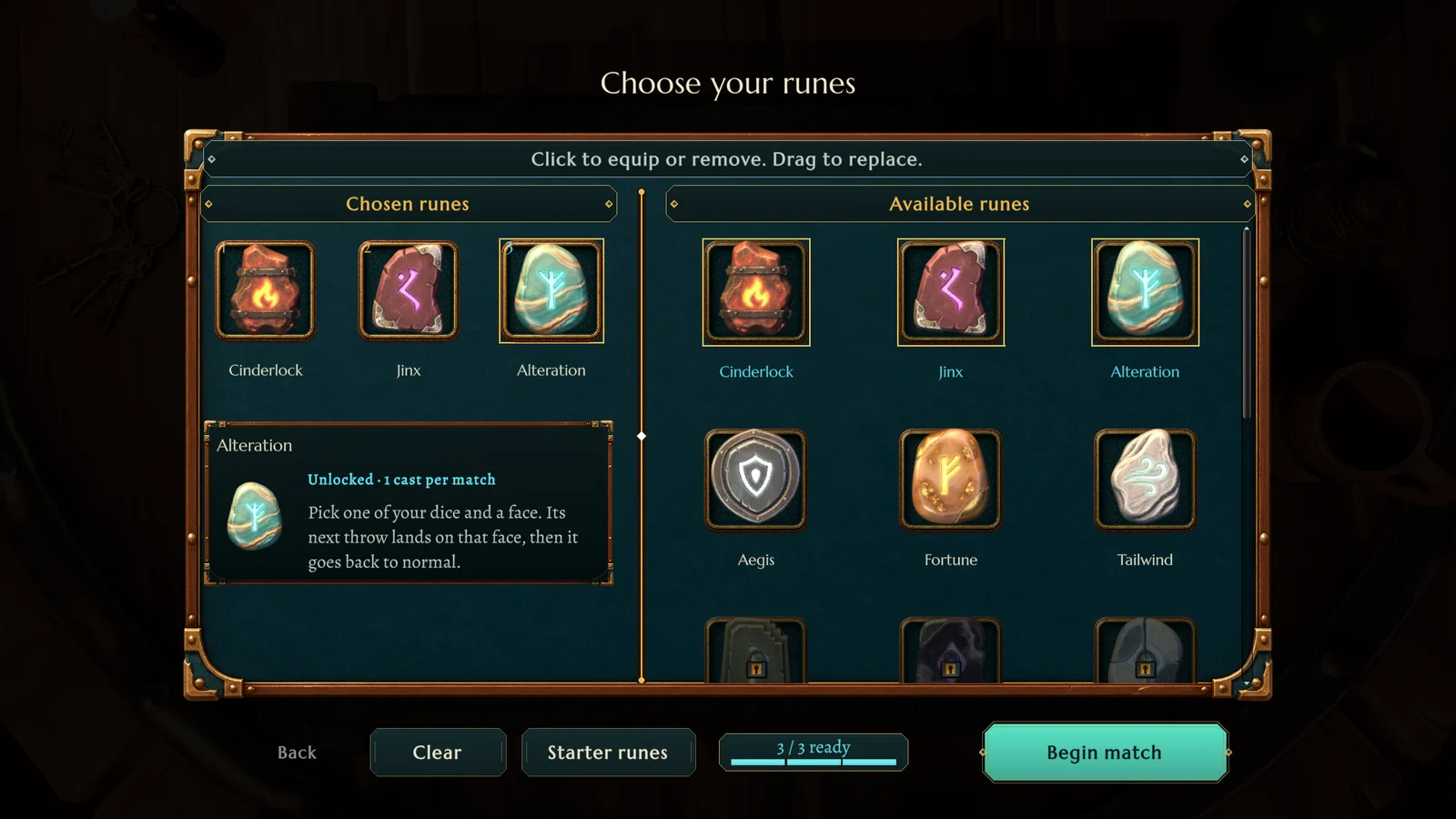
A Tumble Tavern match begins before the first die leaves the rail. The six dice in your loadout and the three runestones beside them define which scoring shapes you want to chase and how you plan to survive the turn.
Six places. Nine choices.
The Ivory Die is the reliable classic. The other eight dice attach extra value to a specific kind of hold: a legal scoring set, a pair, a three-of-a-kind, a small set, a large set, a spread of faces, or a combination containing both a 1 and a 5.
That means the best-looking die is not automatically the best die for the loadout. A bonus only matters when the rest of the table can help create the shape that unlocks it.
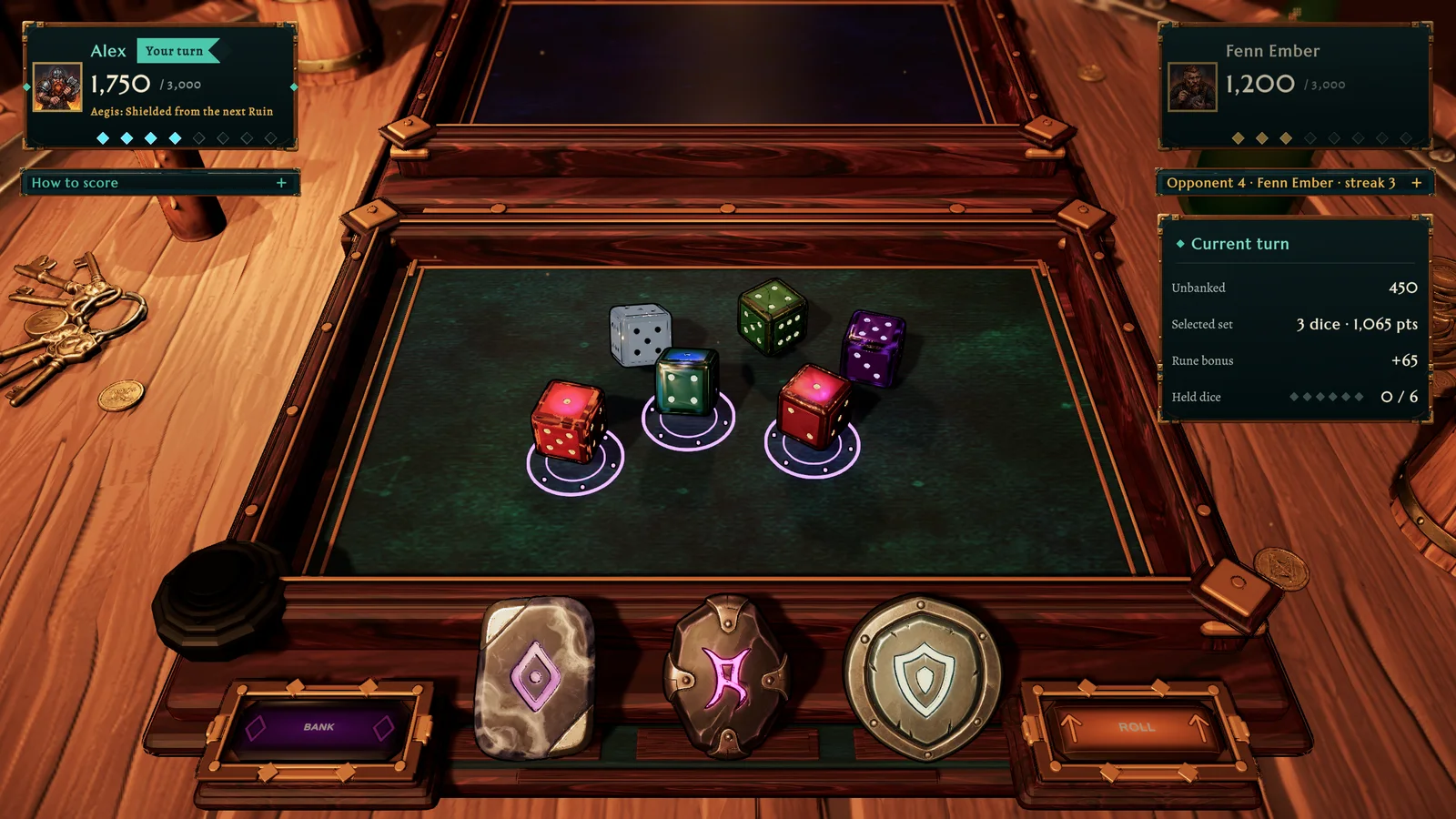
Three spells beside the rail.
Runestones give that plan room to move. Aegis can shield a turn from a Ruin. Fortune adds value to the next held set. Frostbind and Sealbreaker answer pressure from the other side of the table. Longshot and Bloodpact ask for something sharper: commit to the risk now and live with the result.
You equip three from a collection of eighteen. Those three slots keep the choice legible, but they also mean every spell left behind is part of the decision.
Build the score. Change the throw. Bank before the table takes it back.
The decision at the centre.
Dice and runestones create options, but the turn still ends with one call. Bank what you have earned, or roll the remaining dice and put the unbanked score back at risk.
Score with all six dice and Second Wind returns the full set for another throw. Miss a legal scoring set and a Ruin takes the turn. The loadout changes how you reach that decision. It never removes it.